


 CLICK TO CALL
Dental Health Blog | Birch Dental
Why Does a Tooth Hurt Only When You Bite Down?
September 27, 2026 / Dentistry
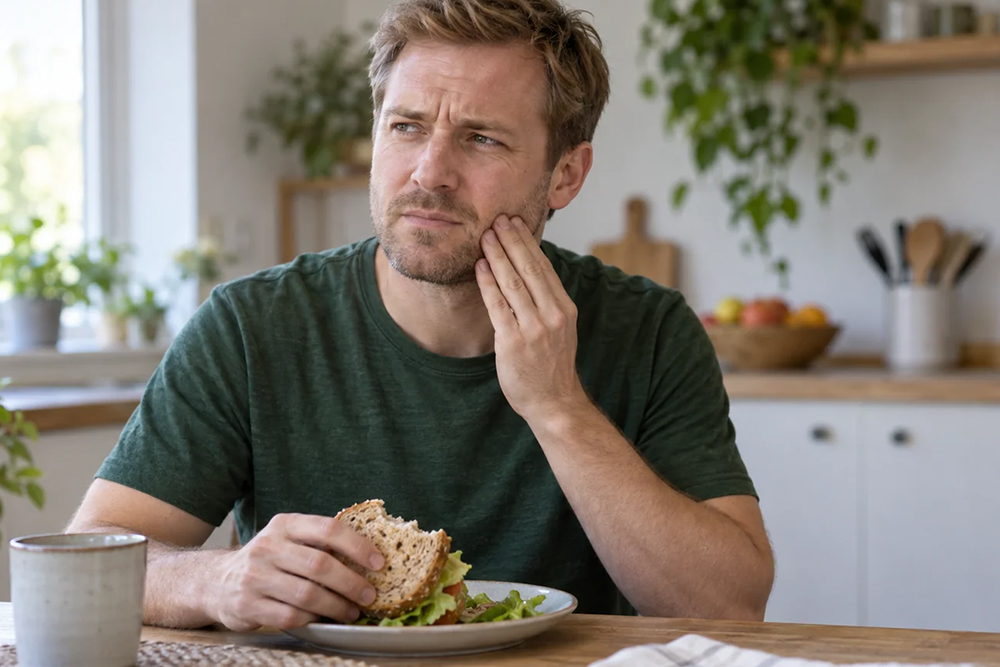
A tooth that hurts only when you bite down can be confusing, especially if it feels mostly normal the rest of the time. Bite-related tooth pain can happen for several reasons, including a small crack, tooth decay, a filling or crown problem, inflammation around the tooth, or pressure from the way the teeth meet. The pain pattern gives useful clues, but it does not confirm the cause on its own.
If the discomfort keeps coming back, gets worse, or makes you avoid chewing on one side, it is worth booking an exam with a dentist in North Whitby. A dental assessment can help narrow down what is happening before the problem becomes harder to manage.
A tooth that hurts mainly under biting pressure should not be ignored if it is persistent, recurring, or getting worse. The cause may be minor, but it can also involve a crack, cavity, restoration issue, inflammation, or bite problem that needs professional assessment.
Why Can a Tooth Hurt Only Under Biting Pressure?
Biting pain often appears because pressure exposes a problem that is not noticeable when the tooth is at rest. A tooth may feel fine while you are talking, drinking room-temperature water, or brushing gently, then suddenly ache when you chew on something firm.
That pressure can affect the tooth itself, the nerve inside the tooth, the gum and ligament tissues around the root, or an existing filling or crown. Sometimes the pain is sharp and quick. Sometimes it feels like a deep ache after you bite down and release.
The tricky part is that different problems can feel similar at home. A cracked tooth, a deep cavity, an inflamed nerve, or a high spot in the bite can all create pressure-related discomfort. The Canadian Dental Association includes pain while chewing among warning signs that a dentist can assess, which is why recurring bite pain is not something to guess at for too long.
A pain pattern can point your dentist in a direction, but it cannot diagnose the problem by itself. The same “hurts when I bite” symptom can come from several different parts of the tooth or surrounding tissues.
Could a Crack, Cavity or Dental Restoration Be Involved?
A crack, cavity, filling, or crown can sometimes cause a tooth to hurt mainly when chewing. These are possibilities, not diagnoses, and the only way to know what is happening is to have the tooth examined.
A small crack may flex slightly under pressure. That movement can irritate the inside of the tooth or the tissues around it. Some cracks are easy to see, but others are subtle and may not show clearly in a mirror.
A cavity can also create pressure sensitivity, especially if decay has weakened the tooth structure or reached deeper layers. If a tooth has a filling, crown, or other restoration, bite pain may be related to the restoration itself, the tooth underneath it, or the way the tooth meets the opposite teeth.
Common clues worth mentioning at your appointment include:
- Whether the pain is sharp, dull, or throbbing
- Whether it happens when biting down, releasing the bite, or both
- Whether one specific tooth seems involved
- Whether the tooth is sensitive to cold, heat, or sweets
- Whether you recently had dental work, an injury, or a hard bite on food
These details help your dental team understand the pattern, but they do not replace an exam.
Can Inflammation or the Bite Cause Pain?
Inflammation around a tooth can make normal chewing pressure feel painful. The tooth is held in place by tissues that act like a cushion around the root. If those tissues are irritated, even a small amount of pressure can feel uncomfortable.
Bite-related pressure can also play a role. If one tooth is hitting harder than the others, or if clenching and grinding are adding extra force, the tooth and surrounding tissues may become tender. Some people notice this as morning soreness, jaw tightness, or discomfort that comes and goes with chewing.
This does not mean the bite is always the cause. Tooth pain can be layered. For example, a tooth may have an existing filling, some inflammation, and extra pressure from clenching. A dental exam helps sort out which factors seem relevant and which are less likely.
Try not to test the tooth repeatedly by biting down to “check” if it still hurts. Repeated pressure can make the area more irritated and may make it harder to tell whether the symptom is settling or getting worse.
When Should Bite-Related Tooth Pain Be Checked?
Bite-related tooth pain should be checked if it is persistent, recurring, worsening, or affecting how you chew. A brief, one-time twinge after biting something hard may settle, but pain that keeps returning deserves attention.
Arrange a routine dental assessment if:
- The same tooth hurts each time you chew
- The pain has lasted more than a day or two
- You are avoiding that side of your mouth
- The tooth feels sensitive as well as sore under pressure
- The discomfort started after biting hard food or after recent dental work
- An old filling, crown, or tooth edge feels different
Some symptoms need more urgent attention. Contact a dentist promptly if bite pain comes with swelling, fever, facial pain, a broken tooth, a knocked-out or loosened tooth, pus, uncontrolled bleeding, or pain that is severe or escalating. The Ontario Dental Association advises contacting a dentist immediately when a dental emergency occurs, especially with severe pain, swelling, broken teeth, or injuries.
If you are unsure whether your symptoms are urgent, it is reasonable to call and describe what is happening. The goal is not to panic. The goal is to get the right level of care at the right time.
Contact a dentist promptly if bite pain comes with swelling, fever, facial pain, trauma, a broken tooth, uncontrolled bleeding, or pain that is severe or escalating.
What Might a Dentist Check During an Exam?
A dental exam for biting pain usually starts with your symptoms and history. Your dentist may ask when the pain began, what triggers it, how long it lasts, and whether anything has changed recently.
From there, the exam may include checking:
- The tooth surface for visible cracks, wear, or decay
- The gums and tissues around the tooth
- Existing fillings, crowns, or other dental work
- How the upper and lower teeth meet when you bite
- Whether the tooth reacts to pressure, temperature, or other simple tests
- Whether dental imaging is appropriate to look at areas not visible during the visual exam
Not every exam leads to the same recommendation. Some cases may be simple to monitor or adjust, while others may need treatment depending on the cause. The useful part of the exam is that it gives you clearer information instead of leaving you to guess.
A dental assessment for bite pain helps narrow down the source of the symptom. It can also help separate tooth-related pain from bite pressure, gum irritation, restoration problems, or other factors that may feel similar at home.
Frequently Asked Questions About Tooth Pain When Biting
Can a cracked tooth hurt only when I bite?
Yes, a cracked tooth can sometimes hurt mainly when you bite or release pressure. A crack may move slightly under chewing force, which can irritate the tooth or surrounding tissues. Cracks are not always easy to see at home, so an exam is the safest way to check.
Can a cavity hurt only when chewing?
Yes, a cavity can sometimes cause discomfort when chewing, especially if the tooth structure is weakened or decay has reached deeper layers. The pain may also appear with cold, sweets, or pressure. A dentist can check whether decay is involved and what level of care may be appropriate.
Why might a filled tooth hurt when I bite?
A filled tooth may hurt when you bite if the restoration, tooth structure, nerve, or bite needs attention. Sometimes the filling may be sitting slightly high, and sometimes the tooth underneath or around it may be irritated. An exam can help determine whether the discomfort is related to the filling, the bite, or another issue.
Is bite pain always a dental emergency?
No, bite pain is not always a dental emergency. Persistent or recurring bite pain should still be assessed, but it may not require emergency care unless it comes with symptoms such as swelling, severe pain, trauma, fever, uncontrolled bleeding, or a broken or loosened tooth.
Can tooth pain when biting go away on its own?
Sometimes a mild, short-lived soreness may settle, especially after a temporary irritation. Pain that keeps coming back, gets worse, or makes chewing difficult should not be ignored. A dental exam can help confirm whether the tooth needs care or whether monitoring is reasonable.
Talk to Birch Dental About Tooth Pain When Biting
If one tooth hurts when you bite down, you do not have to figure out the cause on your own. Birch Dental is a family dental practice on Garden Street in North Whitby, and the team can assess bite-related tooth pain as part of general dental care.
If your pain is persistent, recurring, worsening, or making it hard to chew comfortably, contact Birch Dental to arrange an assessment. You can also call 905-619-4211 to speak with the clinic.
If your symptoms feel urgent, especially if there is swelling, facial pain, injury, severe pain, or a broken tooth, review Birch Dental’s emergency dental care information and contact the clinic for guidance.