


 CLICK TO CALL
Dental Health Blog | Birch Dental
How Can Seniors Make Brushing and Flossing Easier With Arthritis or Limited Dexterity?
November 6, 2026 / Dentistry
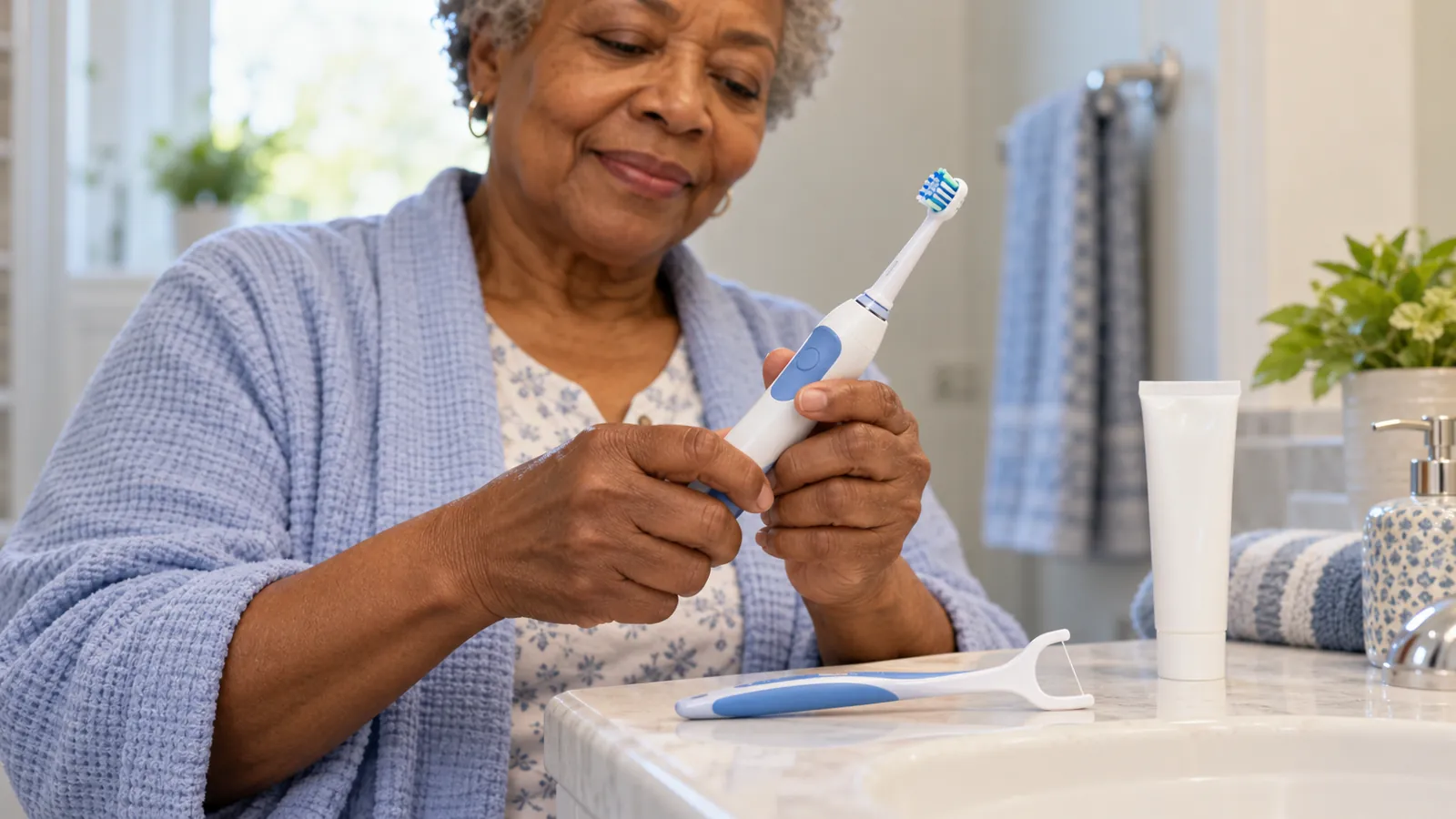
If arthritis, stiff fingers or reduced hand strength makes it difficult to brush or floss, try changing the tool before giving up on the routine. A toothbrush with a wider handle, a powered brush or a floss holder may be easier to manage than the versions you have always used. The right choice depends on your grip, comfort and ability to reach different parts of your mouth.
You do not need perfect hand movement to care for your teeth. Small adjustments can make daily cleaning more practical. At Birch Dental, a dentist for seniors in North Whitby, patients can ask about oral-care techniques and tools that suit their individual needs.
Birch Dental's senior dental care in Whitby includes general oral-health support for older adults.
Why Arthritis Can Make Brushing and Flossing Difficult
Brushing asks more of your hands than you might notice. You need to hold a narrow handle, angle the brush, reach the back teeth and repeat small movements for a couple of minutes. Flossing adds another challenge: wrapping string around fingers, keeping it taut and guiding it gently between teeth.
Arthritis may make those motions uncomfortable, especially first thing in the morning or during a flare-up. Some people have pain in their thumbs or knuckles. Others find that their fingers do not bend easily, or that they tire before finishing. Limited dexterity can also follow an injury or other health condition. There is no single adaptation that works for everyone.
The goal is not to push through joint pain. It is to make the brushing and between-teeth cleaning you need easier to do consistently, without hurting your hands or scrubbing your gums.
Start With a Toothbrush You Can Hold Comfortably
A handle that feels secure can make a surprising difference. A typical manual toothbrush is quite slim. If gripping it requires pinching tightly with your fingertips, try building up the handle so you can hold it with more of your hand.
The Canadian Dental Association suggests simple grip adaptations for people with arthritis, including using a sponge or bicycle grip to make a handle thicker. Its advice on brushing and flossing also recommends a soft-bristled brush. You can read the Canadian Dental Association's brushing and flossing guidance for more detail.
A few ideas to try:
- Slide a clean, comfortable foam grip over the toothbrush handle so it is wider and less slippery.
- Test the handle while standing at the sink. Can you reach your back teeth without squeezing or twisting your wrist?
- Choose a soft-bristled, small-headed brush if a larger head is hard to guide into the back of your mouth.
- If one position strains your hand, adjust your grip rather than pressing harder on your teeth.
Any homemade adaptation should stay secure and easy to clean. Avoid anything with sharp edges or a loose part that could come off during brushing. If a change makes the brush difficult to control, do not use it.
Would an Electric Toothbrush Be Easier?
For some people, yes. A powered toothbrush can do much of the brushing motion, so your hand mostly has to position and move the brush from tooth to tooth. That may feel easier if small repetitive wrist or finger movements are tiring.
A powered brush is not automatically the best choice. Handles vary in size, weight, vibration and grip texture. Some people prefer a simple manual brush with a thicker handle, especially if a powered brush feels heavy or uncomfortable. If possible, compare how different handles feel in your hand before choosing.
Whichever brush you use, gentle contact matters more than force. Pressing hard can irritate gums and wear down teeth over time. Let the bristles do their job. A dentist or dental hygienist can help you check whether your brushing technique is reaching the areas you tend to miss.
A Brushing Routine That Asks Less of Your Hands
Aim to brush twice a day with fluoride toothpaste. Use small, gentle movements along the gumline, then clean the outer, inner and chewing surfaces of your teeth. Give yourself enough time to reach the back teeth rather than rushing through the easy-to-reach front ones.
If your hands get tired quickly, try arranging what you need before you begin. Keep the toothbrush, toothpaste and a cup where you can reach them without awkward twisting. A bathroom mirror and good lighting can make it easier to see where the brush is going. Some people find it more comfortable to sit at a sink, as long as they can do so safely.
On a difficult day, focus on making the routine manageable, not on making it complicated. You might pause briefly, change your grip or use your more comfortable hand to steady the brush. If you regularly cannot reach or clean an area, mention that at a dental visit. There may be a simpler technique or tool to try.
How to Clean Between Teeth When Regular Floss Is Hard to Use
Traditional string floss can be frustrating when finger joints are sore. Fortunately, it is not the only way to clean the spaces your toothbrush cannot reach. The aim is to remove plaque gently from between teeth every day using a method you can control.
A floss holder keeps a short section of floss stretched across a handle, reducing the need to wrap floss tightly around your fingers. Dental tape is wider than standard floss and may feel easier to handle. Small interdental brushes can clean some spaces between teeth, especially where there is enough room for the brush to pass without force. A water flosser is another option some people find easier to manage, although it may not suit every situation.
Choose based on the spaces between your teeth, any dental work you have and how steady your hands feel. Do not force an interdental brush into a tight gap. Ask a dentist or hygienist to demonstrate suitable sizing and technique if you are unsure.
The key is gentle, controlled cleaning. With string floss, slide it carefully between teeth and curve it around one tooth at a time. Avoid snapping it down onto your gums. A holder can make this motion easier, but the same care still applies. If a tool repeatedly causes pain or injury, stop using that technique and seek advice.
What to Do When Your Hands or Mouth Hurt
Pain in your hands and pain inside your mouth call for different responses. If your hand joints hurt while brushing, switch to a more comfortable grip or tool and avoid forcing the movement. If the teeth or gums hurt, bleed repeatedly, or make it hard to eat, do not assume arthritis is the explanation.
Some bleeding can happen if gums are inflamed, but persistent bleeding, swelling, loose teeth or a sore that is not healing deserves professional attention. Continuing to scrub harder is not the answer. The dentist can assess the mouth and recommend an approach that fits what is happening.
It is also worth mentioning changes in medicines or dry mouth at a dental visit, since these can affect oral health. This article focuses on easier brushing and flossing rather than dry-mouth treatment. Birch Dental has a separate article about dry mouth and seniors if you need information on that concern.
Can Family Members or Caregivers Help?
Yes, if the older adult wants assistance. Helping might mean laying out supplies, opening toothpaste, holding a mirror or reminding someone which areas they have already brushed. It does not always mean taking over the toothbrush.
Ask what part of the task is difficult and which parts the person would prefer to do independently. Give them time to explain what feels comfortable. A technique that works well for a caregiver may not feel right to the person receiving help, particularly if their mouth is sensitive or their joints are painful.
If hands-on help is needed, discuss a safe approach with a dental professional rather than improvising. The Ontario Dental Association's tips for seniors and caregivers discuss adapted handles, powered brushes and the value of telling the dental team when brushing or flossing has become difficult.
When to Talk With a Dentist for Seniors in North Whitby
If you are skipping parts of your mouth because you cannot comfortably reach them, or you are unsure which cleaning tool is appropriate, bring that question to a dental appointment. You do not have to wait for a serious problem before asking how to make home care easier.
During an assessment, you can explain which motions hurt, whether a manual or powered brush feels better, and whether flossing has become difficult. The dental team can examine your teeth and gums and discuss options appropriate to your mouth and needs.
You can also ask about general dentistry services if you have a tooth or gum concern that needs assessment. It is helpful to describe the exact problem: for example, “I can brush the front teeth, but I cannot turn my wrist enough to reach the upper back teeth.” That gives the clinician more to work with than simply saying that brushing is difficult.
Frequently Asked Questions
It may. An electric toothbrush can reduce the repeated hand movements involved in brushing. The handle still needs to be comfortable to hold and easy to position, so some people may prefer a widened manual toothbrush instead.
A floss holder or another between-teeth cleaning tool may be easier to control. Dental tape and appropriately sized interdental brushes are other possibilities. Ask your dental team which option is suitable for your teeth and any dental work.
Bleeding may be a sign of gum inflammation, and it should not be dismissed if it continues. Use gentle technique rather than forcing the floss, and have a dentist assess ongoing bleeding, swelling or pain.
Yes. They can help set up the tools, steady supplies or assist with a particular step while respecting the older adult's preferences and consent. If hands-on cleaning is needed, ask a dental professional to demonstrate an appropriate approach.
Make Daily Oral Care Work for Your Hands
A comfortable toothbrush grip, a different between-teeth cleaning tool and a few practical adjustments may make oral care feel less like a struggle. The best routine is one you can actually manage, day after day, without forcing painful movements.
If arthritis or reduced dexterity is getting in the way of caring for your teeth, contact Birch Dental in North Whitby to discuss a dental assessment and ask about home-care options. You can also call 905-619-4211.